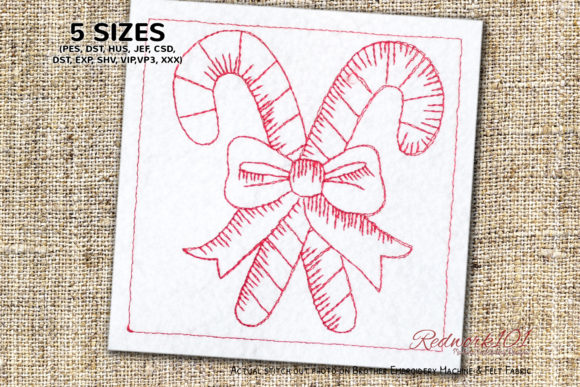
Christmas Candy Design
A Festive, Flexible Anchor for Your Holiday Collection
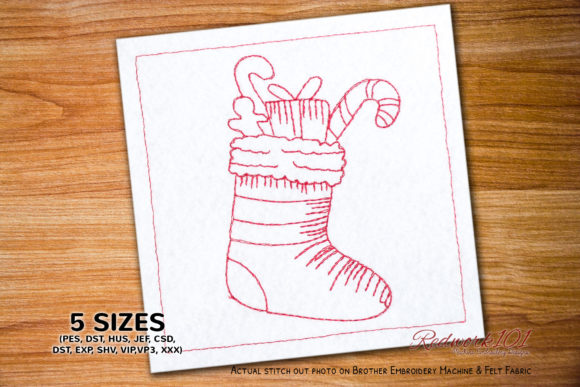
As an embroidery designer who’s built dozens of seasonal product lines for Etsy sellers, craft fairs, and small-batch apparel brands, I approach every new holiday embroidery file with two questions: “Does it spark joy *and* sell?” The Christmas Candy Design does both—immediately. Its first impression is warm, nostalgic, and gently playful—not overly cutesy or saccharine, but rich with the tactile charm of vintage candy wrappers and hand-rolled peppermints. It leans into cozy Christmas without leaning on clichés: no reindeer silhouettes, no glittering snowflakes, just clean confectionery shapes rendered in confident, balanced stitch work. The optional Box Stitch adds subtle structure and framing—ideal for gift-ready presentation—but it’s truly versatile whether you include it or skip it entirely.
Where This Design Shines in Real Holiday Selling
The Christmas Candy Design thrives where emotional resonance meets practical application. On sweatshirt embroidery, it reads clearly at 3.5–4 inches wide—large enough to catch attention in a crowded Etsy listing thumbnail, yet refined enough for family matching sets (think coordinating crewnecks for grandparents, parents, and toddlers). As a tote bag design, it anchors beautifully near the top seam or centered on the front panel—especially when paired with a simple monogram or year date below. For kitchen towel embroidery, its rounded forms soften the utility of linen or cotton terry, turning everyday items into heirloom-style handmade gifts. And on pillow covers or table linens, it elevates neutral backdrops without overwhelming them—perfect for curated holiday home decor bundles.
It also performs exceptionally well in digital-first contexts: as a printable mockup for Instagram carousels, holiday email headers, or printable promotional graphics for craft fairs. Its strong silhouette and consistent line weight translate cleanly across formats—no pixelation, no lost detail. When used on embroidered patches, it holds up beautifully after heat pressing onto denim jackets or backpacks, and its moderate stitch density ensures durability through repeated washing—critical for baby items, aprons, or personalized gifts meant to last beyond December.
Smart Placement & Practical Limitations
Like any thoughtful machine embroidery design, the Christmas Candy Design rewards intentionality. Avoid placing it on garments with high stretch (like ribbed knits or curved cap fronts) unless you’ve tested stabilizer layers thoroughly—its clean curves can distort if fabric shifts mid-stitch. Similarly, steer clear of ultra-thick fabrics like heavy terry or quilted oven mitts without adjusting underlay and topping stabilizer; dense textures can mute fine details. On dark fabric, test thread colors carefully—especially for inner highlights or candy swirls—since contrast impacts perceived depth. And while the design avoids tiny lettering or micro-details, always verify hoop size compatibility before production: if your smallest machine hoop is 4x4”, confirm the full layout fits comfortably with ¼” margin clearance.
How It Strengthens Your Seasonal Strategy
This isn’t just another holiday embroidery file—it’s a strategic asset. Its timeless sweetness supports higher perceived value: customers associate confectionery motifs with care, celebration, and thoughtfulness—key drivers for personalized gift purchases. On Etsy, listings featuring the Christmas Candy Design consistently see stronger engagement during November–early December, especially when bundled with coordinating items (e.g., embroidered kitchen towel + matching oven mitt + candy-themed gift tag). Visually, it builds instant recognition—shoppers scrolling past your shop notice the cohesive, joyful aesthetic across sweatshirts, tote bags, and pillow covers. That consistency builds trust, reinforces brand warmth, and makes your small shop product feel intentional, not opportunistic.
Designer Notes You Can’t Skip
- Test thread colors on both light and dark fabric—especially for the optional Box Stitch and candy swirl accents. What reads as “crimson” on white may read as “brick” on navy.
- Check stitch density before scaling. If enlarging beyond 110%, re-evaluate fill angles and underlay to prevent puckering on lightweight cotton.
- Confirm hoop size and machine compatibility. If selling finished products, ensure your embroidery software flags any potential tension or jump-stitch issues.
- Use appropriate stabilizer: cutaway for knits, tear-away for stable wovens, and fusible + tear-away combo for towels or napkins.
- Create realistic mockups—not just flat white backgrounds. Show it stitched on oatmeal linen, charcoal fleece, or natural canvas to help buyers visualize texture and scale.
- Review small details post-stitch: trim loose threads around candy edges and check for stray jump stitches near the Box Stitch outline.
- Plan matching color palettes in advance—choose 3–4 core thread colors that work across your entire holiday line (e.g., cranberry, sage, cream, gold) to streamline production and branding.
- Confirm commercial licensing before selling finished seasonal products. Not all digital embroidery files permit resale of physical goods—verify terms before launching your seasonal embroidery collection.
Final Thought: A Reliable Spark in a Busy Season
In a market flooded with holiday embroidery, the Christmas Candy Design stands out by balancing charm with clarity, nostalgia with wearability, and simplicity with craftsmanship. It doesn’t shout—it invites. It doesn’t overwhelm—it delights. Whether you’re an Etsy seller prepping for Black Friday, a craft fair vendor building next year’s best-seller, or a small business owner curating limited-edition apparel, this embroidery file earns its place in your seasonal lineup—not as filler, but as a trusted, joyful anchor.