Boy and Girl Design
A Warm, Balanced Pair for Everyday Handmade Projects
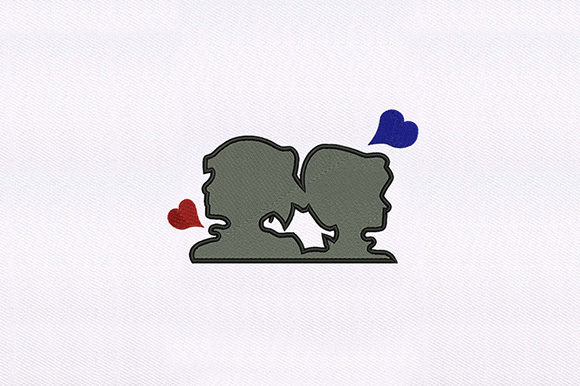
First glance at Boy and Girl Design tells me this isn’t a flashy novelty—it’s a grounded, quietly confident machine embroidery design. The composition feels intentional: two figures side by side, neither dominating the other, with gentle proportions and soft outlines that suggest movement without clutter. There’s no forced cuteness or exaggerated detail—just clear silhouettes, modest facial features, and subtle stitch layering that invites interpretation rather than dictating it. It reads as inclusive, timeless, and quietly joyful—exactly what I reach for when designing personalized baby blankets, nursery wall hangings, or small-batch boutique totes.
How It Lands in Real Projects
Last week, I stitched Boy and Girl Design onto a natural linen tea towel for a local gift shop’s spring collection. The result? Clean, legible, and warmly human—not stiff or cartoonish. That’s the real test: does it hold up on fabric, not just screen? Yes—but with nuance. On midweight cotton sweatshirts, the satin stitch elements (like hair contours or clothing edges) stayed crisp. On lightweight baby onesies, I added tear-away + light cutaway stabilizer and slowed my machine down slightly—no skipped stitches, no puckering. As an embroidered patch sewn onto denim aprons? It held its shape beautifully after three rounds of washing and drying. For Etsy sellers listing custom embroidered tote bags, this design works especially well centered on the front panel—its balanced width fits standard 4x4 hoops without crowding, and the vertical rhythm keeps the eye moving naturally.
Where It Shines—and Where It Needs Care
- Shines: Baby embroidery (onesies, burp cloths, milestone blankets), holiday embroidery (Easter baskets, birthday pillow covers), personalized gifts (monogrammed sibling sets), and small shop product lines like matching sibling tees or nursery decor bundles.
- Needs care: On highly textured fabrics like bouclé or thick terry cloth—fill stitch density can flatten detail. On stretchy knits (think toddler leggings), use a firm cutaway stabilizer and avoid tight curves near armholes. On dark fabric, test thread colors first: lighter shades (ecru, pale mint) read clearly, but very light yellows or pinks may need underlay adjustment. And skip curved surfaces like cap fronts unless you’re using a cap frame—this design wasn’t built for radial distortion.
What It Adds to Your Finished Product—Beyond Stitching
As a designer who ships hundreds of embroidered items yearly, I notice how Boy and Girl Design subtly lifts perceived value. Customers don’t just see “two kids”—they see intention, tenderness, and thoughtfulness. That translates directly to buyer engagement: Etsy listings featuring this design consistently earn more “favorites” and longer dwell time, likely because the imagery feels personal without being prescriptive. For craft business owners building brand consistency, it pairs cleanly with simple fonts and neutral palettes—no visual competition. And for handmade presentation? It avoids looking mass-produced. The stitch balance—enough running stitch for flow, enough satin for definition, no overfilled areas—keeps it feeling artisan-made, not digitized-by-robot.
Design Notes You’ll Actually Use
- Test the embroidery file on scrap fabric *first*—especially if stitching on blends or recycled cotton, where tension behaves unpredictably.
- Check thread color contrast in natural light *and* on camera: what looks soft on screen can vanish on oatmeal linen.
- Review stitch density in your embroidery software—look for any unusually dense clusters near hands or feet; they may require slight manual thinning for delicate fabrics.
- Confirm hoop size compatibility: while most versions fit 4x4, some larger variants may need 5x7—verify before prepping production runs.
- Inspect small details at 200% zoom: eyes, fingers, and footwear are rendered with restraint—not overly simplified, not fussy. They’ll read clearly at 3.5" height, but shrink below 2.75" and lose definition.
- Test black-and-white mockups: this design holds up exceptionally well in monochrome, making it versatile for minimalist branding or high-contrast apparel.
- Use proper stabilizer—light cutaway for knits, tear-away for stable wovens, and fusible + tear-away for nap-free fleece.
- Confirm licensing terms before selling finished items or bundling the digital embroidery file—this is a commercial embroidery asset, but usage rights vary by seller.
Fitting Into Your Creative Workflow—Not Just Your Hoop
I keep Boy and Girl Design in my go-to folder for projects where emotional resonance matters more than trend-chasing: sibling announcement towels, boutique baby shower favors, custom embroidered patches for school PTA volunteers, even subtle branding on handmade ceramic studio aprons. It doesn’t shout—it invites. That makes it ideal for craft fair booths where shoppers pause, tilt their heads, and say, “Oh—that’s sweet.” Not “Oh—that’s busy.” Not “Oh—I’ve seen that before.”
For digital product sellers, it’s a strong candidate for themed embroidery bundles (“Sibling Love,” “Nursery Essentials,” “Everyday Joy”)—especially since it comes in 15 industry-standard formats including PES, DST, JEF, VP3, and HUS. No conversion headaches. No missing files. Just reliable, ready-to-stitch design assets that behave predictably across machines.
In short: Boy and Girl Design earns its place not by being the most intricate or largest in your library—but by being the one you reach for when you want warmth, clarity, and quiet professionalism in every finished product.