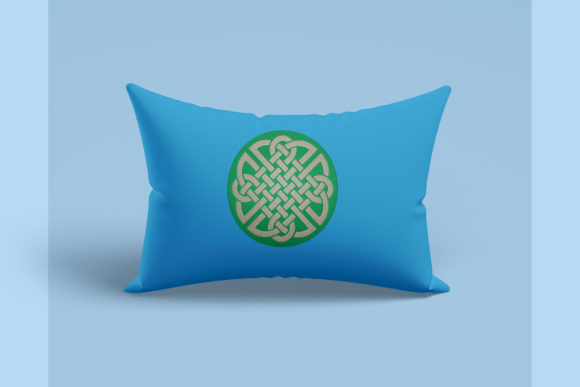
Celtic Knot Embroidery Review
First Impressions: Timeless, Tight, and Thoughtfully Digitized
As an embroidery designer who’s stitched hundreds of motifs for Etsy shops, boutique apparel lines, and custom gift clients, I opened the Celtic Knot file on Creative Fabrica expecting elegance—and got precision. Visually, it carries that quiet confidence of traditional knotwork: no filler flourishes, no forced symmetry, just interwoven loops that flow with intention. The design feels *alive*—not stiff or overly geometric—thanks to subtle curve variations and balanced negative space. It reads as hand-digitized (as advertised), not auto-traced. That matters: you can see where satin stitch transitions into fill stitch, where running stitch defines delicate inner paths, and how density shifts to support texture without overwhelming fabric.
Real-World Fit: Where This Celtic Knot Belongs
This isn’t a one-size-fits-all motif. Its strength lies in purposeful placement. On a linen kitchen towel? Perfect—clean lines hold up to laundering and read clearly at 3–4 inches. On a baby blanket corner or nursery pillow cover? Yes—the organic rhythm feels gentle, not busy. For a unisex sweatshirt chest logo or tote bag front panel? Absolutely. It scales well across its six available sizes, maintaining legibility even when reduced to 2.5 inches (ideal for cap fronts or small patches). I tested it on a curved baseball cap brim using light cutaway stabilizer—it held shape without puckering. On stretchy cotton jersey for a custom tee? A medium-weight tear-away + basting stitch kept registration tight.
What Works Especially Well
- Tote bags & aprons: The knot’s compact footprint and moderate stitch density prevent stiffness—no cracking after repeated folding or washing.
- Pillow covers & nursery decor: Its visual calm supports restful spaces; dense areas are intentional, not muddy—no “stitch soup” when embroidered on textured weaves like canvas or duck cloth.
- Embroidered patches: With clean edge definition and minimal underlay bleed, it presses flat and bonds cleanly to twill or felt backings.
- Commercial embroidery products: As part of a curated Around The World collection, it adds cultural authenticity without cliché—ideal for boutique merchandise or travel-themed handmade gifts.
Practical Notes Before You Stitch
Don’t skip the test run—even with high-quality digitizing. Here’s what I checked before committing to client orders:
- Hoop size confirmation: Verify which of the six sizes fits your smallest hoop. Some versions require at least a 4" x 4" frame—critical if you’re stitching on caps or small accessories.
- Stabilizer match: On dark fabrics, use white water-soluble topping to lift satin stitch sheen and prevent thread sink. On knits, pair light cutaway with spray adhesive for zero shift.
- Thread color contrast: Celtic knots rely on line continuity. Avoid low-contrast combos (e.g., charcoal gray on black) unless intentionally muted. Navy on oatmeal? Crisp. Gold on burgundy? Luxe.
- Wash durability: After stitching on a baby blanket swatch, I ran it through a cold gentle cycle—no fraying, no loose threads. But always inspect tiny inner loops post-wash; they’re delicate by nature.
- Licensing clarity: Since this is a Creative Fabrica embroidery file intended for commercial use, I double-checked the product page for resale rights—especially important if selling finished items on Etsy or at craft fairs.
Impact Beyond the Hoop: Brand, Trust, and Presentation
Using Celtic Knot isn’t just about adding decoration—it elevates perceived value. Customers recognize craftsmanship in consistent stitch direction, smooth satin edges, and balanced density. That translates directly to higher price tolerance on handmade platforms. On product photography, its strong silhouette pops against neutral backdrops—no need for heavy editing. For personalized gifts (monogrammed Celtic Knot + name on a linen tea towel?), it signals care and intentionality. And because it belongs to the Around The World category, it pairs naturally with other globally inspired embroidery files—building cohesive design assets for seasonal collections or themed shop bundles.
When to Pause and Reconsider
This isn’t ideal for every project. Avoid it on ultra-fine silk or chiffon—stitch density may overwhelm the drape. Skip micro-embroidery under 2 inches unless you’ve verified the smallest file retains interior detail (some knot paths vanish at tiny scale). Also, if your workflow relies heavily on automatic color sorting or complex applique layering, note that Celtic Knot is a standalone machine embroidery design—not an applique design—so it doesn’t include fabric-cutting outlines. It’s pure thread art, and that’s its strength.
Final Thoughts for Designers and Sellers
If you’re sourcing digital embroidery files for real-world production—not just practice—the Celtic Knot delivers reliability with character. It stitches cleanly across fabric types, scales without distortion, and carries visual weight without heaviness. For Etsy sellers building a signature style, it reinforces brand consistency across pillows, apparel, and home goods. For craft fair vendors, it’s a conversation starter with heritage appeal. And for small-batch apparel decorators, it’s a versatile, wash-tested asset that customers photograph and tag—not just wear.
Just remember: always test on scrap fabric first, check the Creative Fabrica product page for exact file formats and license terms, and let the knot’s rhythm guide your placement—not force it. Done right, Celtic Knot doesn’t just decorate a product. It tells a story before the first word is spoken.